

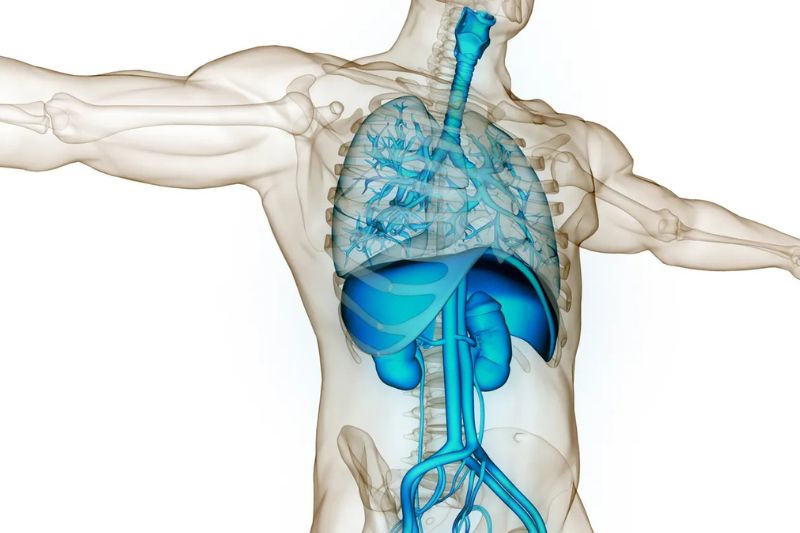
A new £11m research hub backed by GSK, Imperial College London and the University of Oxford will develop advanced computer models of human organs to support faster and more effective drug discovery.
The Modelling-Informed Medicine Centre, a virtual, distributed research centre, will focus on creating digital replicas, known as digital twins, of organs including the lungs, liver and kidneys.
The digital twins will enable researchers to simulate disease progression and test treatments in silico.
How will simulating disease progression inform research?
The initiative brings together expertise in mathematics, data science and experimental biology, establishing a UK hub for modelling-informed medicine.
The centre will also share its outputs on an open-source basis to support wider collaboration across the life sciences sector.
By building detailed, mechanistic models grounded in physiology and pharmacology, the partners aim to better understand how diseases develop and respond to treatment.
This approach is expected to improve the precision of therapies and streamline the development pipeline for new medicines.
What role will Imperial, Oxford and GSK play?
At Imperial College London, researchers will develop patient-specific models using artificial intelligence and biological datasets, representing the interactions of millions of cells within organs.
These models will allow scientists to simulate how treatments tested at a cellular level could affect whole organ systems.
Meanwhile, teams at the University of Oxford will focus on multi-scale modelling, integrating data from molecular through to whole-body systems.
This includes the use of virtual patients to simulate treatment responses, optimise dosing strategies and support the design of computer-based clinical trials.
The biopharma company GSK plans to integrate these computational models into its drug development pipeline within five years, supported by industrial placements for researchers involved in the programme.
Addressing the medicine skills gap
The centre is also intended to address skills gaps in the emerging field by training a new generation of specialists in modelling-informed medicine, helping to embed data-driven approaches across research and development.
The use of digital twins aims to enable more personalised approaches to healthcare, with the potential for clinicians to simulate treatment responses for individual patients and tailor therapies in real time.


