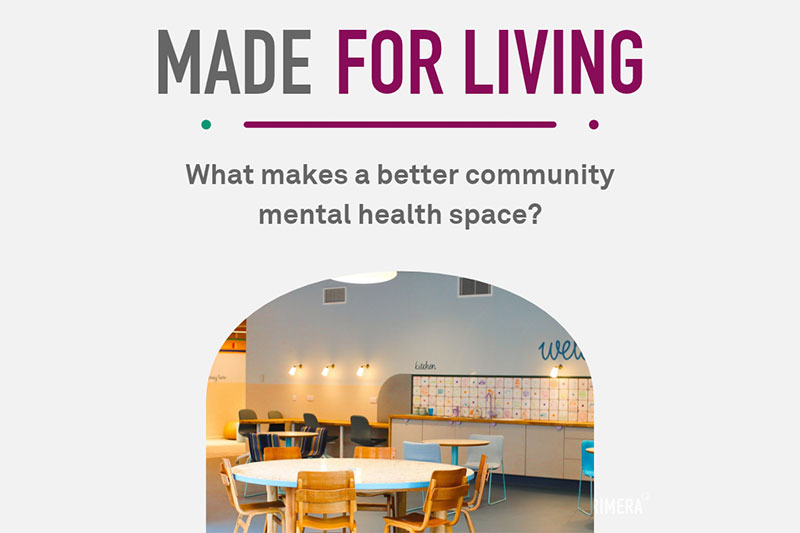
Community mental health spaces are getting more attention.
New investment in neighbourhood mental health centres is bringing renewed focus to how people can access support closer to home, outside the traditional mental health estate.
When our Co Founder Philip Ross recently opened up the question of what might sit between home and hospital, the response showed just how broad that conversation could become. People raised questions about privacy and stigma, age appropriate provision, staffing, access and whether new buildings are even the answer.
It quickly became clear that the “missing middle” may not be one missing type of building. It could be a much broader question about where support happens, how people access it and what those places need to provide.
To explore that further, we spoke with Charlotte Burrows – CEO of Deisgn in Mental Health Network, whose experience spans community development, mental health, drug and alcohol services and design.
Her starting point was important: community mental health isn't new.
Support has been happening through NHS services, charities, voluntary organisations and local groups for years. Some explicitly provide mental health services. Others might just give someone somewhere to go, someone to talk to or a way of feeling less isolated.
What is changing is the attention being given to the environments around that support.
“Not clinical” isn't a design brief
There is already understandable concern that new community mental health centres shouldn't recreate what Charlotte described as “micro clinical spaces”.
But she identified another risk that feels less explored. In concentrating on making these spaces less clinical, we could forget to ask what actually makes them good.
A space can be non clinical and still be confusing, uncomfortable or unwelcoming. Charlotte has seen community organisations with extraordinary people, deep local knowledge and huge amounts of compassion delivering services from buildings that were never really designed around the people using them.
That resonated with the discussion around Phil's post. One contributor questioned whether they would seek support from a hub if it felt associated primarily with severe crisis. Another wanted spaces that felt welcoming and informal, while concerns were also raised about privacy when accessing support somewhere familiar within your own community.
So “not clinical” isn't enough. We need to think positively about what these environments should help people feel and do.
Start with who's in the room
For Charlotte, that starts before anyone begins deciding what the space should look like.
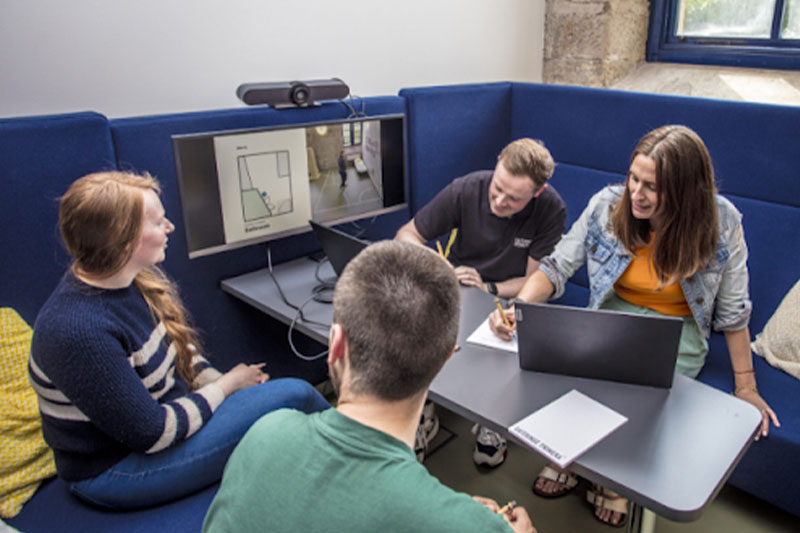
Her priority is early co production, bringing lived experience, community organisations, clinicians, estates teams and designers together while there is still an opportunity to shape the brief. Each understands something different about the environment and the people who will use it.
Perhaps the starting point, then, isn't designing a building and asking whether it works for the community. It's getting the community into the room and working out together what the environment needs to do.
What can we learn from what's already happening?
Charlotte was also clear that we don't need to start from zero.
One example from Scotland is The Nook, from SAMH.
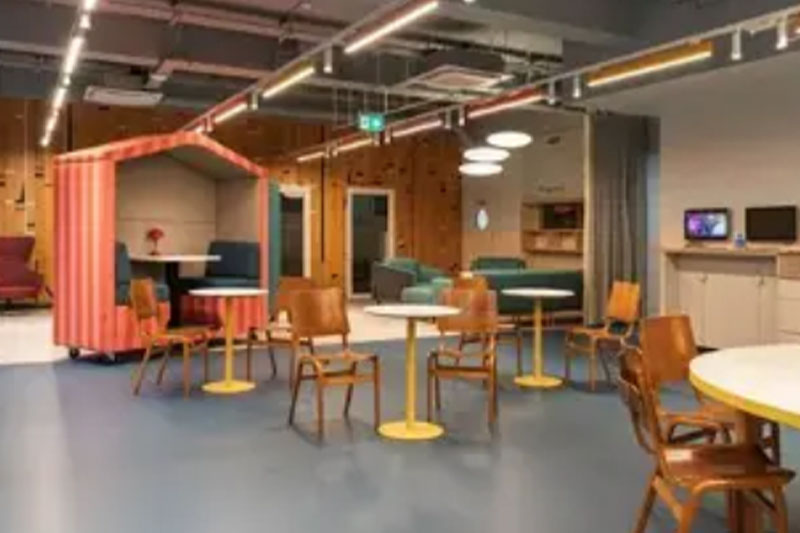
The model provides free, walk in mental health support without requiring an appointment, referral or waiting list. Importantly for this conversation, SAMH describes the environment as deliberately non clinical, and its Aberdeen Nook was developed with input from the local community and people with experience of mental health problems.
It doesn't give us a universal blueprint for community mental health. But it does show what can happen when accessibility, experience and environment are considered together.
Charlotte also pointed to Sheffield, where community and NHS services are working together to provide more accessible mental health support. Sheffield Support Hub is one example of that approach, offering walk in support in a deliberately non clinical environment.
What makes these examples interesting isn't just that they feel less clinical. They bring different perspectives together around how people actually access support, while offering flexible, walk-in support. This removes the barriers put in place by waiting lists, referrals and appointments and ensures people can receive instant support when they need it.
Translating different perspectives
Bringing the right people together is only part of the challenge. Charlotte also talked about the need to translate between them. NHS estates teams, designers, clinicians, community organisations and people with lived experience each bring different knowledge, and don't necessarily speak the same language.
That matters when decisions about light, sound, layout or navigation need to reflect real experiences: someone arriving distressed, bringing a young child with them, or living with dementia. Good design can help turn those different perspectives into an environment that works for the people actually using it.
Where does industry fit?
That also raises an interesting question for those of us working in mental health design.
Charlotte believes there is a role for industry, but cautioned against taking solutions developed for acute mental health environments and assuming they belong in community settings.
Instead, she suggested industry could become involved in what she called the “discover the challenge phase”. Spend time with voluntary organisations, community services and the people using these environments. Understand what makes delivering support harder and where the physical environment helps or hinders.
Only then should we start thinking about solutions.
Some of those challenges may involve lighting, technology, acoustics, navigation or products. Others may have nothing to do with any of those things.
The point is to resist arriving with the answer before we've properly understood the question.
What would a Better Community Space look like?
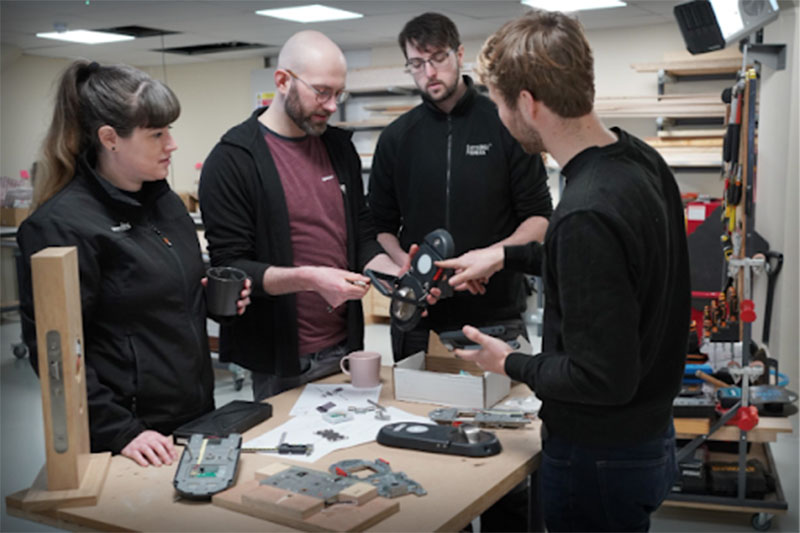
Towards the end of our conversation, Charlotte mentioned the Better Bedroom initiative, which brought different perspectives together to explore what a better mental health bedroom could look like. It raised an interesting question: could we take a similar approach to community mental health?
Not to create one blueprint, but to bring lived experience, community organisations, clinicians, estates and designers together, learn from what is already working, and explore what better could look like in different communities.
So, if we were to create a Better Community Space, who needs to be in the room, and what should we be asking them?


