
Mental healthcare environments are often judged by what they prevent: incidents, harm and risk.
But their true impact is measured in something far more human: how they make people feel when they are at their most vulnerable, and the impact that feeling has on themselves and their surroundings.
The person arriving in crisis, the family member waiting for news, the nurse supporting someone through distress. That's why lived experience matters. Because mental healthcare environments don't simply contain care, they shape how people experience safety, dignity and recovery.
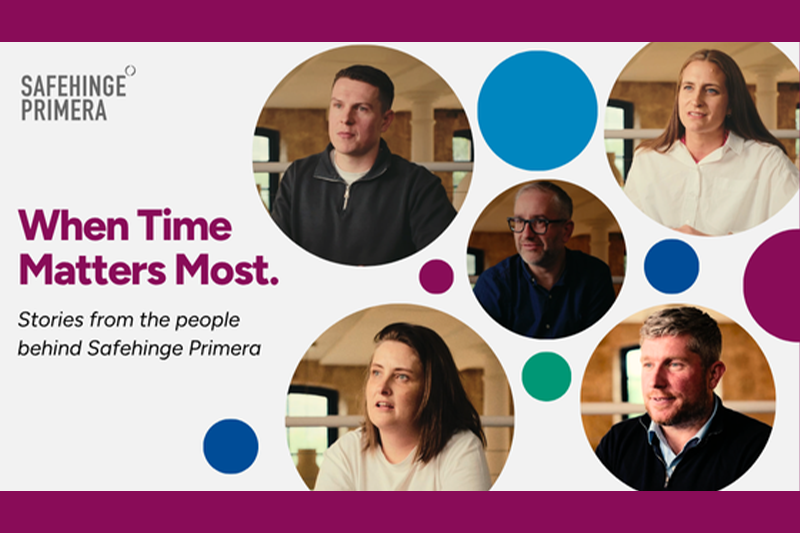
This is why we are launching When Time Matters Most, a new storytelling series from Safehinge Primera.
Over the coming months, we will be sharing personal stories from people across our organisation whose lives have been touched by mental ill health, loss, recovery and hope.
Stories of people who have supported loved ones through crisis.
Stories of people who have experienced mental ill health firsthand.
Stories of compassion, connection and being given enough time to change the course of a life.
These are deeply personal reflections that we hope will give those who have experienced some of the things discussed the courage to seek help and give themselves more time.
But they are also reminders of something universal.
We would never claim to fully understand the experiences of those living with severe mental ill health, the families supporting them, or the clinicians providing care in the most challenging circumstances.
But many of us have known our own moments of struggle, loss or despair. And perhaps those experiences offer the smallest glimpse into a universal truth: that feeling safe, understood and hopeful can make all the difference when time matters most.
None of us should move through vulnerability feeling alone.
And every person who enters a mental healthcare environment arrives with a story that deserves to be understood.
What Impact Could This Have?
Greater emphasis is being placed on therapeutic design, patient experience and recovery-focused care.
As these conversations continue, there is an opportunity to ensure that human experience remains at the centre of decision-making.
Because when people better understand the realities of mental ill health, they design differently.
They think differently about privacy.
About dignity.
About safety.
About family involvement.
About creating environments that reduce distress rather than contribute to it.
And ultimately, they create places where people are more likely to engage with support when they need it most.
The Role of Industry in Creating Safer Environments
Creating effective mental healthcare environments requires collaboration across the entire sector.
Clinicians. Estates teams. People with lived experience. Architects. Designers. Contractors. Manufacturers.
Each plays a role in shaping how an environment supports the people within it.
For manufacturers working in mental healthcare, this responsibility extends beyond providing compliant products. It is about understanding the human experiences those products exist to support.
As designers and contributors to mental healthcare environments, we feel a responsibility to keep lived experience at the forefront of our work. By being transparent about the experiences of our own people, the people behind the products we create, we hope to keep those human realities front of mind.
Because the right environment can influence how safe, calm and supported a person feels during a period of acute distress.
And when time matters most, reliability matters. The right intervention, at the right moment, can save a life. Whether it is an anti-ligature solution that prevents harm, a door alarm that alerts staff to risk, or therapeutic design that helps reduce distress before a crisis escalates, every detail has the potential to create time.
Time for a clinician to respond. Time for a conversation to happen. Time for someone to find another way forward.
Every interaction.
Every decision.
Every environment.
As we share the stories within When Time Matters Most, we hope they encourage wider conversations across the mental healthcare sector about the environments we create, the people they serve, the people working within them, and the role each of us can play in supporting recovery.
Because behind every mental healthcare environment are human stories.
And every story matters.
Click HERE to watch the first of our stories, told by Dan, who lost a friend to suicide.
We hope When Time Matters Most encourages reflection, conversation and a deeper understanding of the experiences that shape mental healthcare. Please feel free to watch, read, share and engage with the stories, and if they resonate with you, we'd love to hear your thoughts.
Before you watch
These stories include discussions of mental health, suicide, loss and recovery. Please watch at your own pace. If you need support, contact Samaritans (116 123), Mind, SAMH or Shout (text SHOUT to 85258).


