

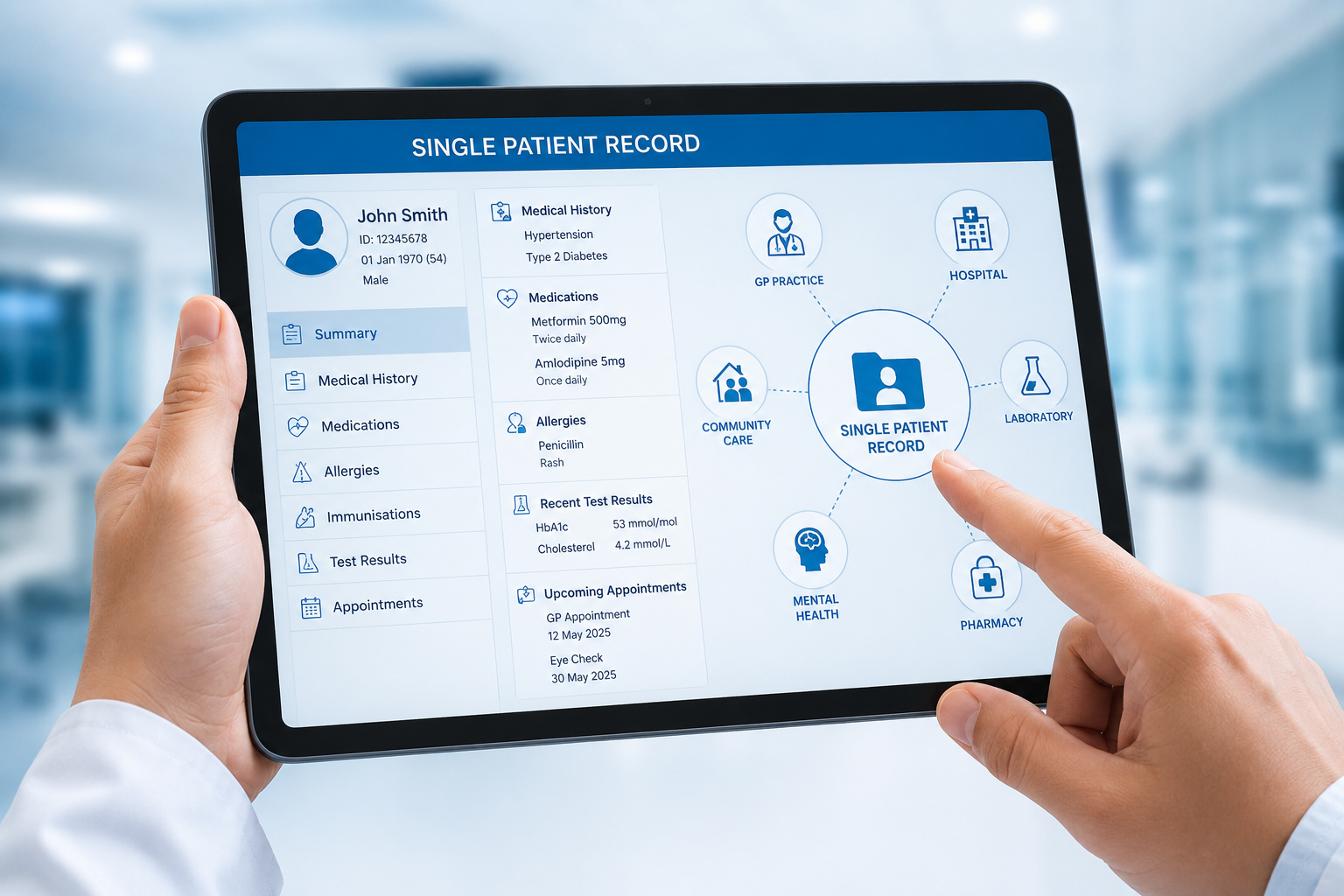
The UK government has unveiled plans to introduce a nationwide single patient record, a move it says could prevent up to 20,000 A&E attendances and 6,000 hospital admissions every year.
Announced as part of the NHS Modernisation Bill, the proposal would require all NHS providers, including hospitals and GP practices, to share patient information through a unified digital record.
The aim is to ensure healthcare professionals can securely access a patient’s medical history regardless of where treatment is delivered.
The move supports the NHS 10-Year Health Plan’s ambition to transform the health service from analogue to digital, with connected patient records and digital tools intended to give clinicians faster access to information and improve the delivery of care across the NHS.
According to the Department of Health and Social Care and NHS England, the system is expected to improve care coordination, reduce duplication and support earlier intervention for patients with long-term conditions.
The government estimates it could also save the NHS more than £20m annually through reductions in medication errors, adverse drug reactions and duplicate prescribing.
The single patient record is intended to address longstanding challenges caused by fragmented health information systems, which can require patients to repeatedly provide the same medical history across different parts of the NHS.
Under the plans, clinicians would have access to a more complete picture of a patient's medicines, allergies and treatment history, helping to inform clinical decision-making.
The government says the changes will also reduce administrative workloads, with an estimated 500,000 clinical hours a year expected to be released through improved access to information and reduced time spent locating records.
Initial deployment is expected from 2027, beginning with specialties including maternity and frailty care.
The government has highlighted potential benefits for maternity services, where patient information can currently be dispersed across multiple systems throughout pregnancy, and for older patients receiving care from several providers.
Alongside the record-sharing reforms, the NHS Modernisation Bill includes wider measures aimed at streamlining NHS administration, including the transfer of NHS England’s functions into the Department of Health and Social Care.
The government has stated that the new system will incorporate safeguards, including audit trails, role-based access controls and patient choice over how their data is used.
However, the proposals have also prompted debate around data governance and confidentiality, with professional bodies calling for robust protections to maintain public trust.
If approved by Parliament, the legislation would form part of the government’s broader programme to digitise NHS services and improve access to care through more integrated healthcare systems.


