

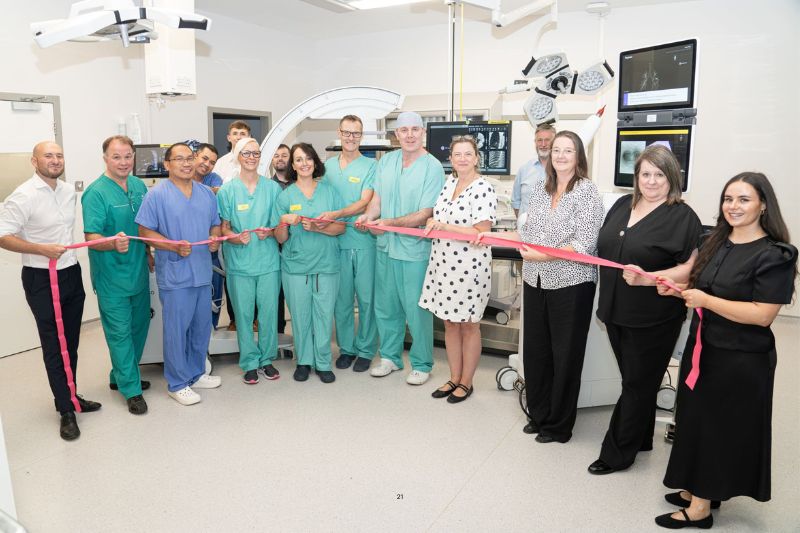
Oxford University Hospitals NHS Foundation Trust (OUH) has unveiled new robotic technology designed to support earlier and more accurate diagnosis of lung cancer.
The Ion robotic-assisted bronchoscopy system has been installed at John Radcliffe Hospital and will serve patients across Oxfordshire and the wider Thames Valley.
Around 150 patients a year are expected to benefit from the technology, according to the trust.
Previously, these patients would have needed to travel to specialist centres in London for similar procedures.
How does the robotic system work?
The system uses a thin, flexible robotic-assisted tube to navigate through the airways and reach small or hard-to-access lung nodules.
Clinicians can then take tissue samples to help confirm or rule out a lung cancer diagnosis.
By combining robotic navigation with advanced imaging, the technology could reduce the need for multiple diagnostic procedures and hospital visits.
It can also be used to mark tumours before surgery, supporting more targeted and minimally invasive procedures.
Dr Alastair Moore, Consultant in Respiratory Medicine and Lung Cancer at OUH, said:
This technology allows us to safely and accurately biopsy lung nodules that were previously very difficult to reach.
One of the first patients to undergo the procedure was 70-year-old Linda Gilder from Didcot, who was referred following NHS lung cancer screening.
The technology helped clinicians confirm an early lung cancer diagnosis, after which she underwent surgery and has since been given the all clear.
OUH said the introduction of the robotic-assisted bronchoscopy system supports efforts to improve cancer outcomes through earlier diagnosis.
Only a small number of NHS trusts currently offer the technology.
How was the system funded?
The project was funded through a combination of Trust investment and charitable support.
Oxford Hospitals Charity contributed funding for supporting equipment, including a specialist carbon fibre procedure table supplied by GE HealthCare to support the precision imaging required for the procedure.
Figures from products such as Institute Ion suggest that the system generally costs between £390,000 to £1.4m for the upfront capital purchase of the hardware and software configuration.
“We know we have more to do to improve our cancer waiting times and this is an important step in our development plan,” said Felicity Taylor-Drewe, Chief Operating Officer at OUH.
The system was officially launched at a ribbon-cutting event attended by clinical teams, Trust leaders and representatives from Intuitive, Oxford Hospitals Charity and GE HealthCare.


