
The NHS Local Improvement Finance Trust (LIFT) programme has marked its 25th anniversary, with health sector leaders gathering at the House of Lords to recognise its contribution to healthcare infrastructure across England.
The event, held on 4 November, brought together representatives from Government, the NHS, private investors and other healthcare organisations to mark a programme that has delivered 350 neighbourhood health buildings since its establishment in 2001.
Hosted by The LIFT Council and Lord Keith Bradley, the anniversary event also saw the publication of a new report examining the programme's achievements, its current role in primary and community care, and its potential contribution to future neighbourhood health services.
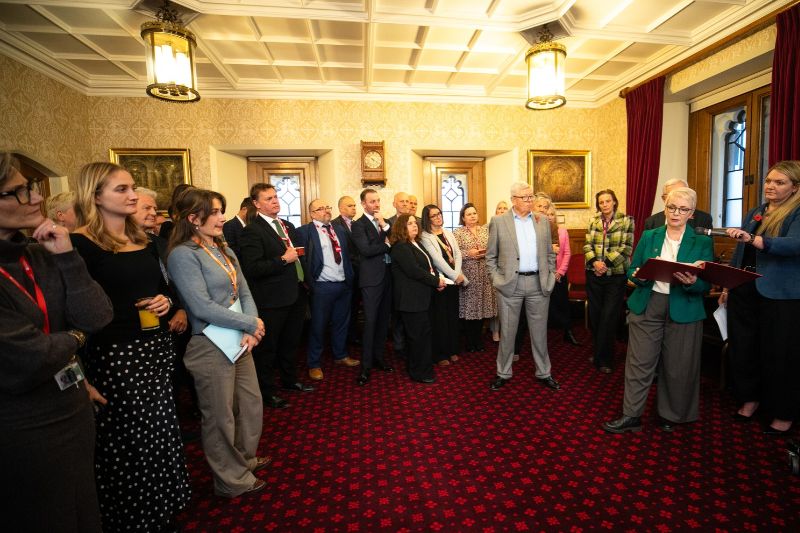
Speaking at the anniversary event, Minister of State for Health Karin Smyth MP said:
"The NHS LIFT programme recognised a really important need, the need for the poorest communities to have access to the best possible facilities and care.
LIFT was a pragmatic solution to use public sector assets with private sector finance and expertise, it was a great ambition, and it has delivered.
Established to address the need for investment in public healthcare infrastructure, NHS LIFT brings together public and private sector partners to develop primary care and community facilities through long-term joint venture partnerships.
Under the model, private investors design, build, finance and maintain the buildings, taking responsibility for their ongoing performance.
Community Health Partnerships (CHP), a Government-owned company, holds a 40% stake in the NHS assets and acts as the local head tenant.
According to the anniversary report, the programme has secured £2.5bn in private investment alongside £100m of public funding.
It has delivered 350 healthcare buildings, with nine in 10 located in areas with above-average health needs.
The report also references an independent review by PwC assessing the value for money of the LIFT estate.
Existing estate supports shift towards community care
The report highlights the continuing role of LIFT facilities in providing primary and community healthcare, with millions of patients accessing services through the buildings.
Many centres have also been adapted to accommodate changing healthcare requirements, including the provision of screening and diagnostic services that would traditionally have been delivered in larger hospital settings.
The programme's existing estate is also expected to contribute to the Government's ambitions to move more care out of hospitals and into neighbourhood settings.
A number of LIFT buildings have already been selected to become part of the first wave of new neighbourhood health centres announced by the Government.
Lessons for future healthcare infrastructure
The anniversary also provided an opportunity to consider how the programme's partnership model and existing buildings could inform future NHS infrastructure delivery.
"Throughout my many years in politics and healthcare, it is rare to find a piece of public policy that continues to resonate long after it was first created, but the NHS LIFT programme does exactly that,” said Lord Bradley.
"LIFT has not only delivered vital health facilities for millions of patients over the last 25 years, it is also a programme that will continue to have a lasting impact long into the next chapter of the NHS."
Former Health Secretary Alan Johnson also highlighted the scale of private investment secured through the programme, describing it as a successful public-private partnership that had transformed healthcare provision across the country.
Sarah Beaumont-Smith, Chair of The LIFT Council, said the experience gained through the programme would be important as the Government considered new partnership models for healthcare infrastructure.
Wendy Farrington-Chadd, CEO of Community Health Partnerships, added that the organisation remained focused on securing the future of the existing estate so that its buildings could continue to meet the needs of patients and communities.
The impact of the programme was also highlighted by Dr Dan Harman, consultant community geriatrician at the Jean Bishop Integrated Care Centre in Hull, which was delivered through NHS LIFT in 2018.
He said more than 20,000 people had received proactive care at the centre over the past eight years, helping to reduce the need for hospital admissions and acute care.
"The building enables us to have a specialist team delivering evidence-based interventions to the many who can benefit, without it, none of this would be possible," he said.
With the NHS continuing to prioritise neighbourhood-based services, the LIFT estate is expected to remain part of the infrastructure supporting the shift towards community care, prevention and more locally accessible diagnostics.