

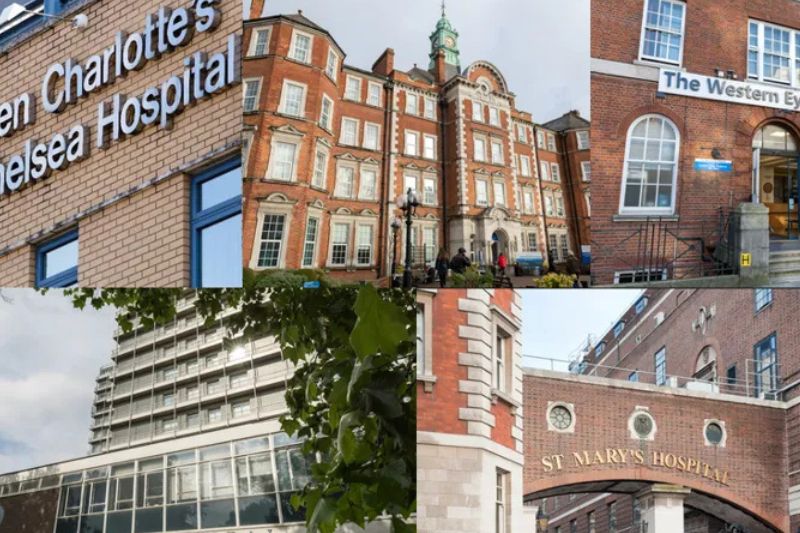
Imperial College Healthcare NHS Trust has announced a five-year investment programme worth more than £600m to improve its estate, upgrade equipment and address maintenance requirements across its hospitals.
The programme includes around £80m for priority maintenance, £128m for new equipment and technology, and £215m for four major improvement schemes.
A further £20m has been allocated to the purchase of Canal House, next to St Mary’s Hospital, which will provide space for services and staff displaced by the closure of the hospital’s main outpatient building.
The Grade II-listed building will accommodate functions including virtual care and corporate and administrative teams, releasing space within the hospital for clinical services.
The acquisition was funded through NHS England’s RAAC remediation programme, following the identification of RAAC in the roof of St Mary’s main outpatient building.
£42m St Mary’s acute care facility
At St Mary’s Hospital, the Trust plans to build a three-storey acute care facility linking the existing same day emergency care (SDEC) service in the Paterson Building with A&E and inpatient wards in the Queen Elizabeth the Queen Mother Building.
The £42m development is supported by an NHS England fund aimed at helping trusts improve waiting times and other constitutional standards.
Construction is due to begin in summer 2027, with completion expected in 2028/29.
The Trust also plans refurbishment works to Manvers ward, angioplasty rooms and the main pharmacy.
The Jefferiss and Winston Churchill buildings will be refurbished as part of work to relocate services from the main outpatient building, which is due to close because of structural issues.
The works will include new antenatal clinic rooms, allowing antenatal services to return from the St Mary’s Birth Centre, where they were temporarily relocated.
£68m Charing Cross refurbishment
At Charing Cross Hospital, a £68m refurbishment of the ground and first floors will include an expanded SDEC department and a new surgical assessment unit.
The scheme will also include changes to the main hospital entrance and outpatient area.
Delivery will be phased, with the expanded SDEC and surgical assessment unit scheduled to open this winter.
At Western Eye Hospital, a £2m refurbishment of the main entrance and ground floor, including the emergency department, is planned.
The project is supported by a £1m fundraising appeal led by Imperial Health Charity and is due to be completed by November 2027.
£83m Hammersmith extension
Hammersmith Hospital will receive an £83m extension to Zone A, creating additional theatre capacity as well as diagnostic and ward space.
Further works at the hospital include enabling works for an additional Da Vinci surgical robot and improvements to energy infrastructure.
At Queen Charlotte’s & Chelsea Hospital, the maternity day assessment and triage unit is being refurbished and expanded, with completion expected by May 2027.
Bereavement rooms in the labour ward and neonatal unit will also be upgraded.
St Mary’s redevelopment progresses
The investment programme sits alongside Imperial’s longer-term plans to replace the ageing St Mary’s estate with a new 800-bed major trauma and general hospital.
The Trust unveiled updated designs for the proposed hospital in July following the second phase of public consultation.
The scheme would consolidate services currently spread across multiple buildings into a single approximately 30-storey hospital on a smaller footprint, with a planning application expected in spring 2027.
The redevelopment is being progressed separately from the immediate estate investment programme, with the Trust continuing design and planning work while exploring funding options for construction.
Energy infrastructure investment
The programme includes a further £19m for work to improve energy systems across the Trust's hospitals.
This forms part of more than £110m of investment from the Public Sector Decarbonisation Scheme and NHS England since 2021.
The work includes heat pumps, solar panels and upgraded gas and electricity controls, with existing gas-fired heating and hot water systems being replaced with lower-carbon alternatives.
Imperial College Healthcare estimates that the completed decarbonisation programme will reduce greenhouse gas emissions associated with heating, cooling and powering its buildings and equipment by 43% compared with 2020/21 levels.
The £600m programme will be reviewed and reprioritised as the Trust's estate requirements and available funding change.


