
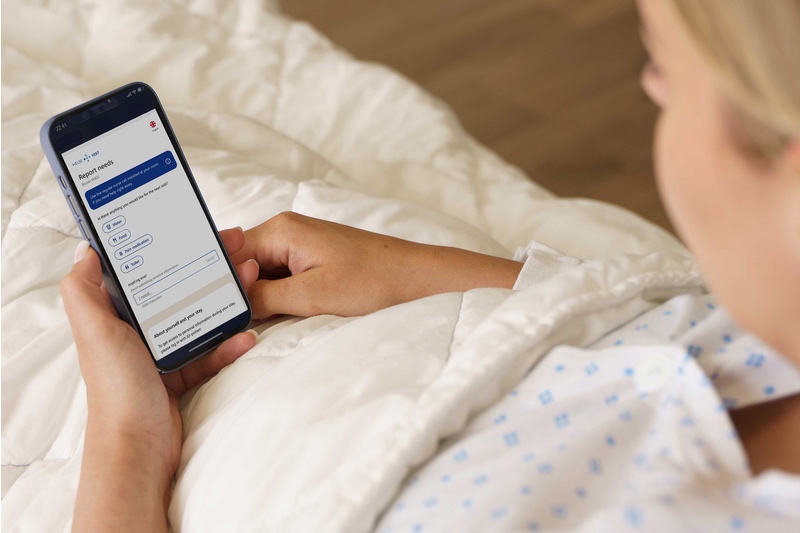
Hospital 2.0 is set to fundamentally redefine patient-centric care, shifting from traditional models to prioritising the individual's experience and driven by the widespread adoption of single room designs in new hospitals. While these private spaces offer many advantages for infection control and patient privacy, they introduce a distinct challenge: how to maintain patient safety and well-being while adapting established nursing workflows.
The answer lies in the strategic integration of smart hospital technology and intelligent building principles. This goes beyond just patient comfort; it’s about supporting genuine patient engagement – encouraging individuals to take active ownership of their care, their immediate hospital environment and their overall inpatient experience.
Bridging the patient information gap
At the heart of this transformation is the need to eliminate what is often described as the ‘information vacuum’. Historically, patients have often found themselves in a passive state, disconnected from real-time information about their care, their immediate needs or even who their designated nurse or doctor is. Single room environments can exacerbate this sense of isolation.
The move from multi-bed wards to single rooms means nurses are required to cover greater distances, and patients, behind closed doors, can feel more alone. When a patient activates a traditional nurse call, staff often respond without prior knowledge of the patient's specific need which can lead to inefficiencies and delayed resolution. This absence of immediate, contextual information creates a vacuum that can hinder efficient care delivery and patient reassurance. Many patients are also reluctant to use the call bell for what they perceive as minor requests, fearing they might distract nurses from more critical tasks.
At the heart of this transformation is the need to eliminate what is often described as the ‘information vacuum’
Innovative technology, such as


