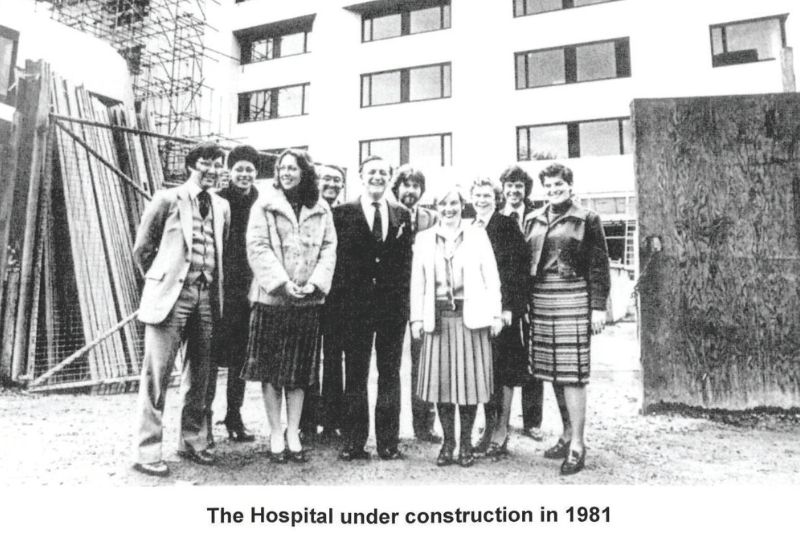
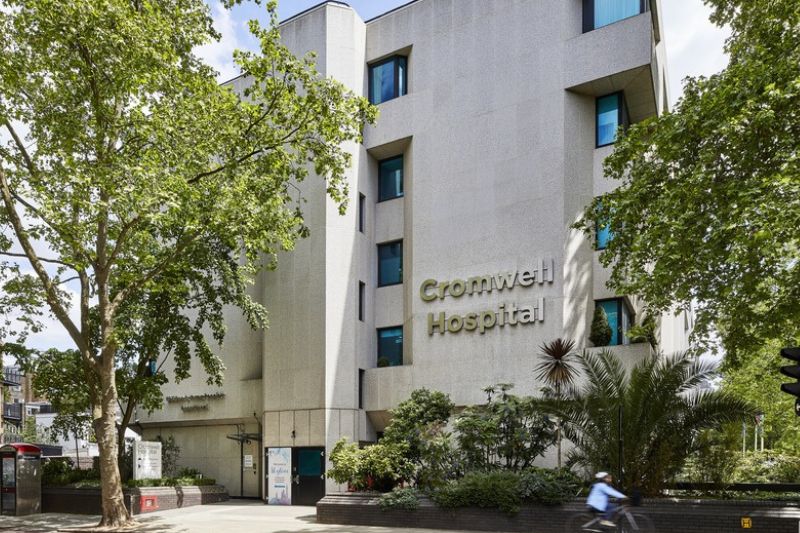
Cromwell Hospital was built in 1981 and has undergone significant change since then.
Bupa’s acquisition of Cromwell Hospital in 2008 began a sustained journey of growth and investment in services, technology, and patient areas to ensure the highest standards of care are consistently delivered.
The private healthcare market in the UK has evolved rapidly, alongside major scientific and medical advances.
At Bupa, we pride ourselves on being pioneers. As the industry continues to progress and transform, we must also adapt to meet the growing needs of society and enable world-class innovation.
In 2023, we took a major step in this journey by acquiring the neighbouring Lexham Gardens property, formerly a hotel, to support Cromwell Hospital’s expansion.
This acquisition has driven growth and transformation, and at the end of 2025, we were proud to open the doors to the extension.
The new environment provides a fresh, modern space designed to support consultants and staff while delivering high-quality care to more patients.
Lexham Gardens
The 33,000-square-foot site has been carefully designed to enhance the patient experience throughout.
The focus has been on creating comfortable, spacious facilities while introducing state-of-the-art equipment and expanding vital departments.
Creating an inclusive space where all patients feel comfortable has been a central priority.
Comfort and wellbeing have been embedded throughout the design, ensuring patients receive a thoughtful and considered package of care that addresses every aspect of their treatment.
This approach was particularly important in the new Chemotherapy Day Unit, which has been designed to provide privacy and comfort during treatment.
Recognising the challenges many patients face during chemotherapy, the emphasis was placed on creating a calming and supportive environment.
The therapy department has doubled in size, providing advanced, high-quality equipment for all patients.
The expansion includes specialised spaces for children, a sensory room, and a fully equipped rehabilitation gym.
The redevelopment has also enabled the hospital to refresh other areas, meaning that 95% of Cromwell Hospital’s facilities will have been refreshed or redeveloped within the last six years.
This includes two brand-new Cath Labs and a new 10-bed Recovery department, designed to provide a calm and reassuring environment for patients immediately after treatment.
Investing in technology
The expansion has created additional capacity for new technologies and the replacement of older equipment.
Cromwell Hospital has long been recognised for its commitment to clinical innovation, and the new space allows this to continue.
The redevelopment features a range of frequently used technologies, including new X-ray, fluoroscopy, ultrasound, and DEXA equipment, alongside two new Cath Labs.
These specialised facilities enable consultants to perform diagnostic and interventional procedures for cardiovascular conditions.
Remaining at the forefront of medical technology ensures patients have access to the latest treatments while supporting consultants in delivering UK-leading procedures.
Sustainability
We recognise that the health of the planet is closely linked to the health of people. With healthcare responsible for an estimated 4–5% of global greenhouse gas emissions, reducing environmental impact is an increasing priority.
Sustainability considerations have therefore been integral to both the wider hospital strategy and the Lexham Gardens extension.
The project was guided by three core principles: recycle, reuse and repurpose.
Rather than demolish and rebuild, the team retained the existing structure, preserving embodied carbon and minimising environmental impact.
Maximising the retention of existing infrastructure was a key objective.
Where this was not possible, the most sustainable alternatives were implemented. Materials, including concrete, steel, and internal finishes, were recycled wherever feasible.
Structural elements were reused with minimal intervention to the building’s frame, while spaces were repurposed to meet modern clinical requirements.
This approach reduced waste and demonstrated how legacy buildings can be successfully adapted to meet contemporary healthcare standards.
Sustainability measures also extended beyond the building structure. The redevelopment provided an opportunity to reassess systems across Cromwell Hospital, ensuring more efficient operations.
These measures include smart energy monitoring, high-efficiency heating, ventilation and air conditioning systems, low-energy lighting, water-saving fixtures, and the use of low-emission materials.
By investing in technologies with improved efficiency, the extension is designed to support ongoing reductions in carbon emissions.
These features ensure sustainability is embedded not only in construction but also in day-to-day operations.
As a result, Cromwell Hospital achieved an excellent BREEAM certification, a recognition of sustainable design and performance that reflects our broader ambition to reach net zero by 2040.
What next?
Cromwell Hospital has been on a continuous journey to introduce innovative treatments, advanced technologies, and modernised environments for patients and staff.
The new extension represents a significant milestone in this strategy.
Last year, Bupa acquired two new hospitals, New Victoria Hospital in Kingston-upon-Thames and King Edward VII’s Hospital in central London, marking the organisation’s first hospital acquisitions since 2008.
We are now exploring how the practices and improvements implemented at Cromwell Hospital, particularly in sustainability and design, can be applied across these new sites.
We are also expanding our Health Clinics, launching new mental health centres under the Mindplace brand, and considering how Cromwell Hospital’s development model can inform the wider Bupa Health Services portfolio.