
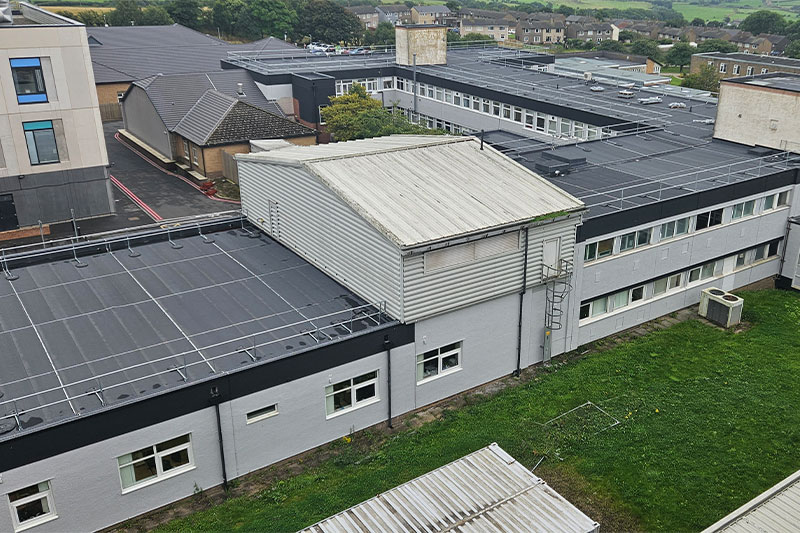
Flat roofing is an important part of that picture, but there is surprisingly little national data that tells us exactly how many NHS flat roofs exist, how old they are, or how much would be required to replace them. What we do know, however, is that the condition of the estate is becoming an increasingly important operational issue, writes Justin Pitman, Sales Director at Proteus Waterproofing.
The latest Estates Returns Information Collection (ERIC), published by NHS England, puts the estimated cost of eradicating backlog maintenance across the NHS estate in England at £15.9 billion for 2024/25. This represents the investment required to restore buildings and other estate assets to a defined acceptable condition based on assessed risk. It does not represent the cost of planned maintenance.
The scale of the backlog has been increasing for several years. In 2023/24, it stood at £13.8 billion, meaning the latest figures represent a 15.7 per cent increase in a single year. NHS Property Services says the current backlog is now greater than the annual cost of running the entire NHS estate, but how much of this problem sits above our heads?
That is where the picture becomes less clear. There is currently no published national NHS statistic identifying the total area of flat roofing across the estate, the proportion of NHS buildings with flat roofs, the number that have reached the end of their serviceable life, or the cost of replacing them.
That absence of data makes it difficult to put a precise value on the NHS's flat-roof problem. It does not, however, mean the issue can be ignored. Roof deterioration is already recognised as part of the wider condition problems affecting NHS buildings and for healthcare estates the consequences of a failing roof can extend well beyond the cost of repairing a leak.
Ageing infrastructure is the bigger picture
NHS Property Services surveyed 77 NHS estate leaders in March 2026 to understand the challenges facing estate management. 63% identified ageing infrastructure as their biggest barrier to reducing backlog maintenance, ahead of funding constraints at 53% and the scale of the maintenance backlog itself at 38%. These figures provide useful context for roofing.
A roof is part of a building's infrastructure and its condition affects much more than whether water gets into the building. Deteriorating waterproofing can lead to water ingress, damage to internal finishes and equipment, disruption to occupied areas and increasingly expensive reactive repairs. In a hospital or healthcare environment, the consequences can be considerably more serious because the building has to continue operating while maintenance takes place.
NHS Property Services says clinical demand leaves little opportunity to close spaces for essential works. Its research found that operational pressures can lead to short-term fixes being prioritised while longer-term improvements are deferred. That creates a particular challenge for roofs.
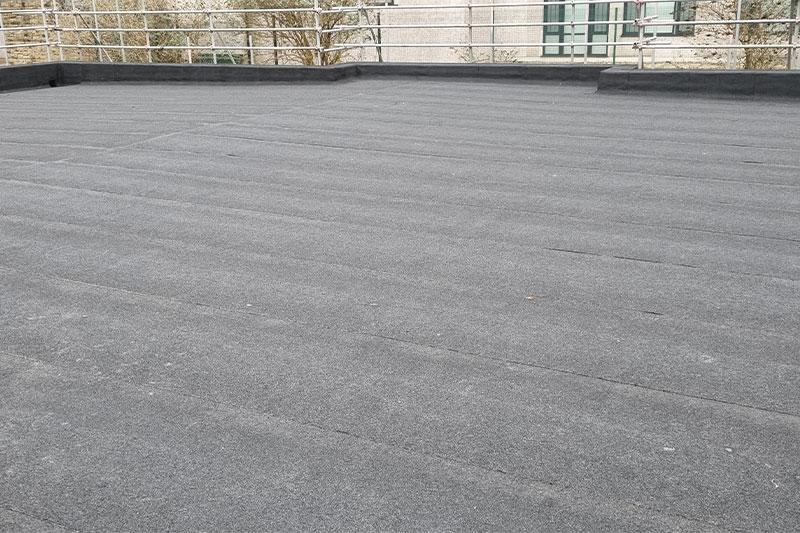
A hospital cannot always be treated like an empty commercial building. Wards, treatment rooms, diagnostic facilities, laboratories, offices and other clinical spaces may need to remain operational while work takes place above them.
The question therefore becomes bigger than “Does the roof need repairing?” It becomes “How do we manage the roof throughout its remaining life, and when is replacement the most sensible option?”
There is direct evidence that roof deterioration is affecting NHS buildings. The King's Fund has previously highlighted leaking roofs alongside broken lifts, failing equipment and deteriorating buildings when describing the pressures facing the health service.
Infrastructure failures have also been associated with disruption to clinical services. The scale of those failures demonstrates why building condition cannot be treated as a peripheral facilities-management issue.
Care, however, is needed when interpreting the statistics. There isn't a national figure showing how many hours of lost clinical time were caused specifically by leaking or failed roofs. That said, what the evidence does show is that infrastructure problems can have consequences that extend into healthcare delivery itself.
Flat roofs can present particular challenges
Flat roofs are found across many types of healthcare buildings and can present a range of maintenance issues. Waterproofing systems deteriorate with age. Falls and drainage arrangements can become less effective. Outlets can become blocked. Details around penetrations, plant and roof edges can deteriorate. Insulation may no longer provide the performance expected of a modern building.
None of these issues automatically mean a roof needs replacing. That is why inspection and condition assessment matter. A roof that has years of useful life remaining should not be treated in the same way as one where repeated repairs are masking fundamental deterioration. Understanding the difference is essential when budgets are under pressure, which is why we at Proteus offer free roof surveys to NHS stakeholders.
This is because the NHS has to make difficult decisions about where limited capital should be spent, and good information about the condition and remaining life of individual assets can help those decisions.
There is also another dimension to the discussion. When an NHS roof does require replacement, the project can provide an opportunity to consider the wider performance of the building.
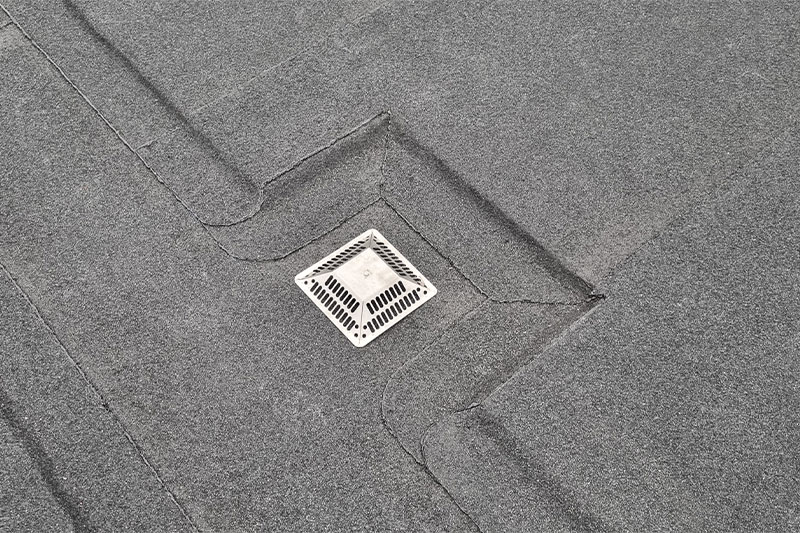
NHS Property Services specifically identifies roof replacement as an opportunity to incorporate additional insulation and improve energy efficiency. Its wider estates strategy is also being shaped by the NHS's net-zero ambitions. That changes the way a roof replacement can be viewed.
The objective doesn't have to be replacing one waterproof covering with another and leaving everything else unchanged. Depending on the building and project, consideration can be given to thermal performance, drainage, access, maintenance, renewable energy, whole-life costs and the future needs of the building. The important point is that these decisions need to be made together rather than treating the roof as an isolated component.
From reactive repairs to planned asset management
However, the most important lesson from the NHS data is that reactive maintenance is becoming increasingly difficult to sustain. When the overall backlog is £15.9 billion and 63% of estate leaders identify ageing infrastructure as their biggest barrier, the scale of the challenge requires longer-term thinking.
For flat roofs, that means understanding what exists across an estate, its condition, its age, its construction, its history of repairs and its likely remaining service life.
That, as previously mentioned, is where detailed surveys, accurate asset information and planned maintenance programmes become important. They allow estates teams to move away from waiting for a leak before taking action and towards managing roofs as long-term assets.
Because the real question for NHS estates teams is not whether roofs need attention, but how early they can identify the roofs that need it, how intelligently they can prioritise them and how effectively they can turn necessary maintenance into long-term investment in the buildings where healthcare is delivered.


