The NHS 10-Year Plan makes a clear statement of intent: care should happen “digitally by default”, with physical contact reserved for neighbourhood health centres “when needed.” The ambition is admirable, but ambition and implementation are two different things.
The NHS serves communities of extraordinary diversity: different ages, ethnicities, levels of family support, and very different relationships with technology and with healthcare institutions. A ‘digital by default’ model only works once neighbourhood settings are genuinely established, trusted, and accessible.
Applying this before the infrastructure and confidence exist risks leaving the most vulnerable patients behind, meaning sequencing matters.
An estate in crisis
Before we can talk honestly about the future of GP premises, we need to acknowledge the present. The BMA’s 2025 GP Premises Survey found that 83% of practices consider their premises unsuitable for future needs. Nearly three quarters don’t have enough space to train the next generation of GPs.
The NHS estate has been starved of capital for more than a decade and much of it, primary care included, is crumbling.
Against that backdrop, the 10-Year Plan’s commitment to a neighbourhood health centre in every community is welcome, but it raises an obvious question about where the capital comes from.
The GP partnership model is under structural strain as care shifts toward community settings, and the challenges Claire Fuller raised in 2022 about how primary care organises and funds itself remain largely unresolved.
Ambition and implementation are two different things
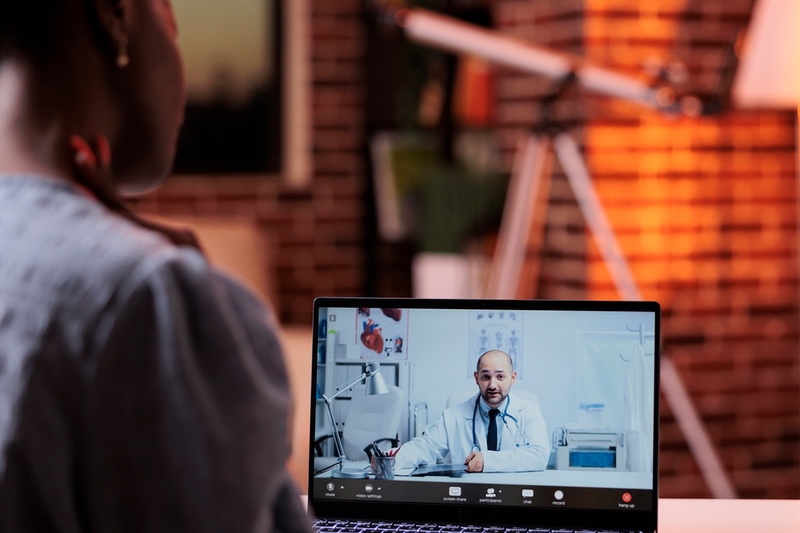
What remote GP actually changes
Remote GP infrastructure doesn’t just address workforce capacity, it changes the footprint calculation for physical premises entirely. If a significant proportion of consultations, triage, follow-up, medication reviews, abnormal labs processing, can be handled remotely by qualified GPs, the number of consulting rooms required for a given patient list drops.
Administrative functions that once needed desk space in a building can be distributed. The physical surgery becomes a hub for what genuinely cannot happen remotely, including examinations, procedures, the consultations that require a room.
At Asterix, we’ve seen this directly. Our model saves practices more than one full GP session per day. Across the NHS, wider adoption could save £250–300m annually. Scaled across primary care, that capacity recovery runs to tens of thousands of square metres of consulting space that practices would otherwise need to lease, build, or refurbish.
Investing in remote infrastructure that reduces the physical footprint is a smarter use of scarce resources than refurbishing buildings designed for a different era.
Have you delivered a digital healthcare project with measurable impact?
From smart infrastructure and connected care environments to digital patient experience and operational efficiency improvements, the Building Better Healthcare Awards celebrate the innovations helping healthcare facilities work smarter.
Enter your project today and showcase your achievements to the wider sector
The harmony between remote and in-person
This is not a binary choice between digital and physical. They need to co-exist.
There are symptoms patients need to discuss face to face. There are clinical presentations that only reveal themselves through physical examination. And there are communities where, for cultural, psychological, or practical reasons, a screen is simply not the same as a room. These are real constraints, and any honest assessment of remote GP models has to take them seriously.
There is also something worth saying about


