
RFiD Discovery rolls out GPS tracking for infusion pumps in NHS hospitals

By Alexa Hornbeck | Published: 13-Feb-2026

The provider of location tracking solutions has released a GPS system that tracks BodyGuard T infusion pumps after NHS trusts experienced shortages and costly replacements

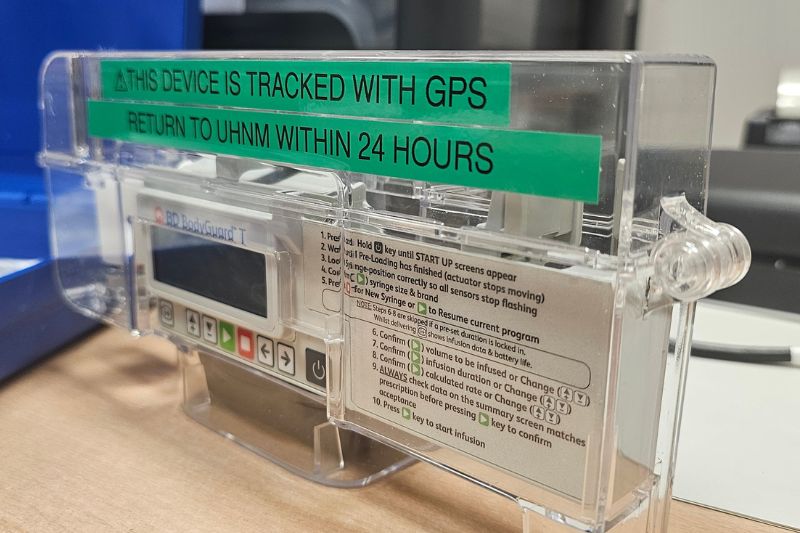
RFiD Discovery has launched a GPS and Wi-Fi enabled tracking system for BodyGuard T (formerly T34) infusion pumps, allowing NHS teams to monitor devices both on hospital sites and in the community.

The technology, which combines a medical-grade lockbox with a GPS tracking tag, has already been deployed at University Hospitals of North Midlands NHS Trust (UHNM).

Hospitals and community care teams often lose visibility of infusion pumps once they leave hospital sites, leading to shortages, costly replacements and delayed discharges. 

The infusion pumps are medical devices used to deliver precise doses of medication or fluids to patients over a set period.

UHNM experienced repeated losses after introducing a new fleet of pumps. 

Forty pumps were lost within nine months, each costing approximately £2,500 to replace, affecting patient discharges and care delivery.

The Trust reports that the technology has completely eliminated syringe pump losses, saved over £100,000 in replacement costs, and improved patient flow for palliative and end-of-life care.

A UK study surveying 15 NHS trusts’ ENT departments found that the average cost of lost clinical equipment was more than £4,900 per department per year, and found that delays in locating devices negatively affected patient care. 

After deploying tracking technology, no equipment was lost during the follow-up period, demonstrating the potential impact of real-time visibility tools.

How does the system work?

The new system provides real-time location data and automated alerts when devices remain in the community beyond expected timeframes. 

It integrates with UHNM’s existing RFiD Discovery platform, which tracks tens of thousands of devices across multiple hospital sites using RFID technology.

“Since implementing GPS tracking, we haven’t lost a single BodyGuard T syringe pump. The system has stabilised our fleet and improved service delivery,” said Adam Broadhurst, Specialist Medical Engineer at UHNM.

The GPS tags are shock resistant, waterproof to IP68 standards, and powered by replaceable AAA batteries with up to 10 years of life. 

Alerts can be sent via text, email or phone, and the solution works alongside RFID, BLE and Wi-Fi tracking technologies.

RFiD Discovery is also in discussions with multiple NHS trusts to introduce an automated contact‑tracing solution, using real‑time location data to help infection control teams rapidly identify potential exposure events and reduce healthcare‑associated infections.

You may also like