
It is no secret that emergency departments (EDs) across the UK are under immense strain. A significant proportion of patients arriving at A&E are experiencing acute mental health crises rather than physical emergencies and traditional emergency departments are rarely designed to provide the calm, specialist environment these patients need.
The result can be overcrowding, long waits, and care that doesn’t always meet the unique needs of mental health patients.
It was announced earlier this year that over the next decade, specialist mental health crisis centres will be opened across England to attempt to reduce crowding in accident and emergency (A&E) departments. Ten hospital trusts have been piloting new assessment centres to deal with people experiencing a mental health crisis.
The aim is to offer patients appropriate care in a calm environment, avoid long waits in A&E for them, reduce overcrowding in hospitals and relieve pressure on emergency services, including the police. The scheme is expected to be expanded nationally to "dozens of locations" as part of the Government’s 10-year NHS plan.
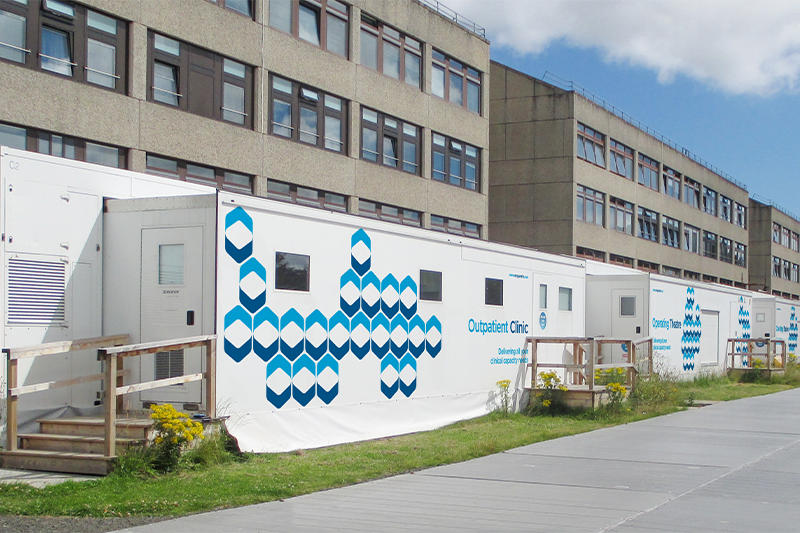
To build these facilities ‘from scratch’ takes time and budget. However, short term options such as mobile healthcare solutions could provide immediate relief by creating dedicated, calmer spaces for crisis care while permanent solutions are developed, while modular built facilities could be utilised as short, medium or even long-term options to create the required spaces.
Healthcare providers are increasingly turning to mobile and modular units to expand capacity quickly and flexibly, and these options could successfully be deployed to provide ring-fenced and stand-alone mental health emergency facilities. These purpose-built facilities could be positioned adjacent to hospitals or in community settings, creating dedicated Mental Health A&E hubs that divert patients away from general emergency departments.
Unlike traditional EDs, modular mental health A&E spaces can be designed with therapeutic architecture: quiet rooms, natural light, safe furnishings, and areas for de-escalation. And by diverting mental health patients to tailored facilities, emergency rooms can focus on physical trauma and acute medical cases, improving flow and reducing overcrowding.
Mobile units can be relocated or modified through the use of connected additional mobiles or modular sections as community needs change. This adaptability is crucial in areas with fluctuating demand or limited permanent infrastructure. They can be co-located with crisis teams, social workers, and voluntary sector partners, ensuring patients receive holistic support beyond immediate medical care.
Vanguard Healthcare Solutions has successfully supported healthcare providers to create similar facilities to enhance their own existing A&E departments and increase dedicated capacity.
The creation of a temporary Minor Injuries Unit at one of Scotland’s busiest hospitals had an immediate positive impact. The development, at the Royal Infirmary of Edinburgh helped NHS Lothian relieve pressure on the city’s accident and emergency department.
The MIU was initially created as a mixed modality facility, combining mobile and modular spaces. As needs changed, a fully modular building was installed. Similarly, a Vanguard solution was used by Glasgow Queen Elizabeth University Hospital to create a minor injuries unit. Both facilities successfully supported their host hospitals to maintain patient flow and provide an enhanced A&E experience for patients.
Policymakers are under pressure to deliver solutions that relieve overcrowding, improve patient outcomes, and meet national commitments to parity of esteem between physical and mental health. Mobile and modular infrastructure offers a strategic lever to achieve these goals.
The NHS has pledged to expand crisis care and provide alternatives to A&E for mental health patients. Modular and mobile units directly support this by creating dedicated, rapid-access hubs. For policymakers, mobile and modular infrastructure can provide speedily deployed solutions to create these much-needed facilities.