
Social value has become a central part of NHS construction procurement, with projects increasingly expected to deliver wider economic, environmental and community benefits.
However, the sector must do more to measure the long-term difference projects make to communities rather than simply reporting activity, according to Kier’s Health Sector Director.
Matt Griffiths said contractors are increasingly being challenged to demonstrate how healthcare developments support wider health outcomes, workforce needs and local communities, but existing metrics often fail to capture their true impact.
"We're moving towards outcomes rather than simply measuring hours," Griffiths told Building Better Healthcare.
"Frameworks require us to report apprenticeship numbers, volunteering hours and local spend, but the real question is what difference those things made."
Procurement is driving change
Social value is no longer an optional consideration for NHS projects.
Griffiths said it now plays a significant role in public sector procurement, accounting for at least 10% of tender evaluation scores.
"In procurement, it's 10% of the score," he said. "That's the minimum across public sector projects, and some NHS trusts choose to increase that weighting or combine it with environmental objectives."
However, Griffiths believes healthcare still lacks consistent methods for evaluating whether contractors have delivered long-term benefits.
"The NHS cares about it a lot," he said. "It's just that there isn't a measurement mechanism that's demanded like some other sectors."
He pointed to education as an example where social value performance is supported by more established key performance indicators, something he believes healthcare could increasingly adopt as programmes such as the New Hospital Programme develop.
Measuring outcomes rather than activity
Although contractors continue to report figures such as apprenticeship numbers, volunteering hours and spending with local suppliers, Griffiths believes these metrics only tell part of the story.
"We have to report those things as part of the frameworks, and rightly so," he said.
But we're moving towards outcomes rather than simply measuring hours.
Instead, Kier increasingly combines traditional reporting with post-occupancy evaluations that gather feedback from NHS staff and patients after facilities have opened.
"The most powerful things in there are often a sentence somebody said, not necessarily a number," Griffiths said.
"The biggest impact would be if someone has a career they couldn't have had before, or a stronger community than they had before. The challenge is finding meaningful ways to measure those outcomes."
Who is responsible for delivering social value?
While site teams contribute through mentoring apprentices, supporting work placements and engaging with local communities, Griffiths said social value delivery is coordinated by dedicated specialists rather than left solely to project managers.
Kier employs a national social value team alongside regional social value managers who work with learning and development specialists throughout a project's lifecycle.
"We've got a national social value lead and team, and then regional social value leads as well," Griffiths said.
"They work alongside our learning and development teams because creating long-term opportunities isn't something that happens on site alone."
He said successful projects begin with social value planning during pre-construction, allowing contractors to align activities with local priorities before work starts.
That early planning can create pathways from school engagement and work experience through to apprenticeships, graduate schemes and long-term careers in construction or NHS estates and facilities management.
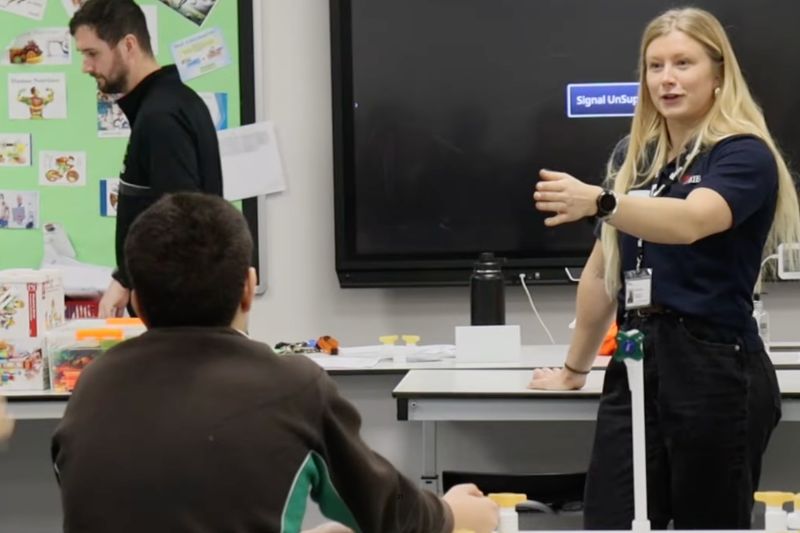
One example is Kierriculum, Kier's schools outreach programme, which introduces pupils to careers in construction and helps develop future industry skills.
"The best opportunities are created as early as possible," Griffiths said.
We always try to make sure there's a strategy in place during pre-construction.
"The pathway is from the start to a proper legacy."
Linking construction to prevention
Griffiths believes healthcare construction is becoming increasingly aligned with the NHS's focus on prevention.
Because contractors cannot directly deliver clinical care, he said their greatest contribution comes through improving the wider conditions that influence health.
"Good social value in healthcare construction is moving towards the social determinants of health," he said.
"The things that make good health are people's jobs, homes, communities, environment and opportunities."
That shift means contractors are increasingly considering employment, skills, wellbeing and community resilience alongside the buildings themselves.
Mansfield CDC shows wider impact
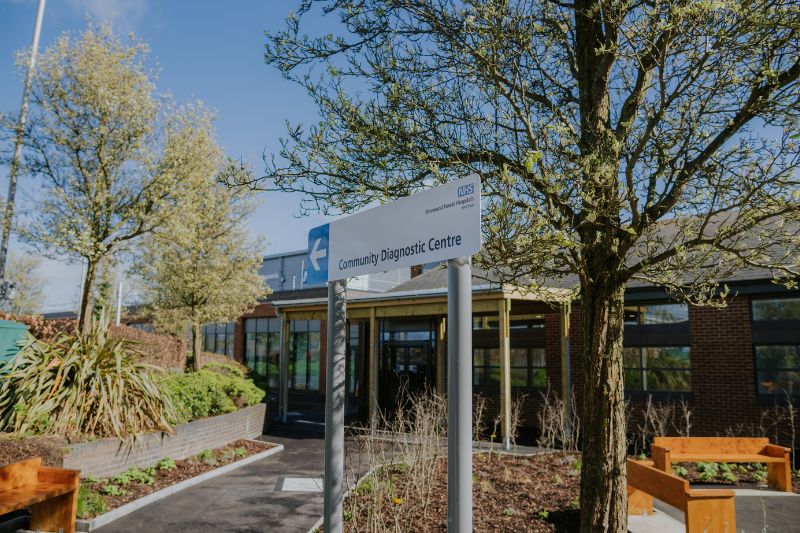
Kier's Mansfield Community Diagnostic Centre, completed in May, demonstrates how these principles can be put into practice.
Alongside delivering the NHS facility, the contractor worked with West Nottinghamshire College to create a memorial garden recognising NHS staff and patients affected by the COVID-19 pandemic.
Students designed the garden with professional landscape architects before Kier and its supply chain delivered the project.
"You support a local need, students gain real experience, and then the community has something that wasn't there before," Griffiths said.
The project later received praise from the Trust's Chief Medical Officer.
"This garden will never appear on a dashboard. No one will track its activity or report its output. I think this is what makes it so valuable. It exists for the things that numbers cannot hold."
For Griffiths, the project highlights why social value should be judged by lasting community benefit rather than simply the number of volunteer hours delivered.
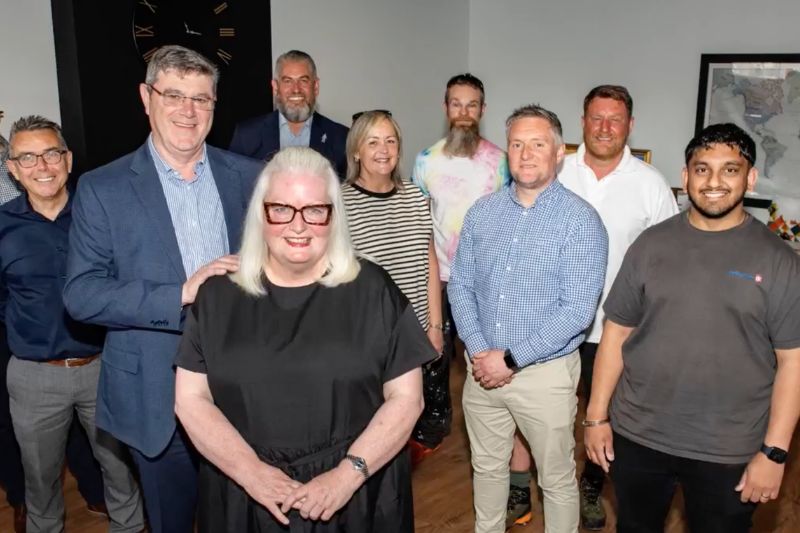
Sunderland Community Soup Kitchen
Griffiths also pointed to Kier's work with the Sunderland Community Soup Kitchen as an example of social value that cannot easily be captured through conventional metrics.
Working with supply chain partners, Kier transformed a disused takeaway and neighbouring shop into a permanent community hub for the charity as part of its wider social value commitments linked to Sunderland's Culture House project.
Around £30,000 worth of labour, materials and expertise was donated, with the refurbishment including rewiring, plastering, new flooring and a complete interior fit-out.
Without the refurbishment, Griffiths said, the charity would have struggled to expand the services it now provides to vulnerable people.
"It's about people and society because health is agnostic of a sector," he said.
"Without our supply chain and our teams helping refurbish that building, they wouldn't have been able to offer the services they offer now."
Supporting the NHS workforce
The NHS workforce crisis is also reshaping how contractors approach social value.
With large numbers of NHS estates and facilities staff expected to retire over the coming decade, Griffiths believes construction projects can help create new career pathways while improving staff wellbeing.
"There is a large proportion of the NHS that will be retiring in the next 10 years," he said.
Healthcare projects can introduce people to careers in facilities management and construction while creating environments that encourage existing NHS staff to remain.
"If you can do anything around making staff rooms a nicer place to be, or creating wellbeing spaces around hospitals, that actually helps people stay in their jobs," Griffiths said.
Sustainability and social value are converging
Griffiths said the distinction between social value and sustainability is becoming increasingly blurred.
Many contractors now report environmental outcomes alongside traditional social value metrics.
At Kier, social and environmental sustainability sit under a single strategy focused on people, places and the planet.
"In our Building for a Sustainable World strategy, social sustainability sits alongside environmental sustainability," Griffiths said. "They're under the same strategy because they're intrinsically linked."
Griffiths believes environmental improvements directly contribute to better health outcomes, making them a natural extension of social value in healthcare construction.
One of the social determinants of health is the environment. If you look after the environment, you create healthier places for people to live and work.
Kier is also exploring ways to combine environmental improvements with community benefits, including creating biodiversity and wellbeing spaces on unused NHS land around hospitals.
Looking ahead
As the New Hospital Programme, Community Diagnostic Centres and emerging neighbourhood health centres continue to reshape the NHS estate, Griffiths expects social value to become increasingly linked with digital technology, workforce planning and prevention.
He believes the industry's next challenge is not only delivering more social value activity, but demonstrating the lasting difference those projects make.
"The building is important," he said, "but it should be for the people that use it and the people around them."