


Entering the NEC in Birmingham for this year’s Digital Health Rewired conference feels like stepping into the future: one where robots support care delivery, patient monitoring happens anywhere, and cybersecurity and digital policy are as critical as clinical practice.
With more than 80 speakers across around 40 sessions, alongside a packed exhibition floor, the venue is alive with digital tools and discussion at every turn.
Across a packed programme of keynote sessions, panels and live demonstrations, day one focused on how digital tools are moving from pilot to practice, with real-world deployment now firmly underway.
NHS App evolves into a “digital front door” and beyond
A central theme of the morning programme was the continued evolution of the NHS App.
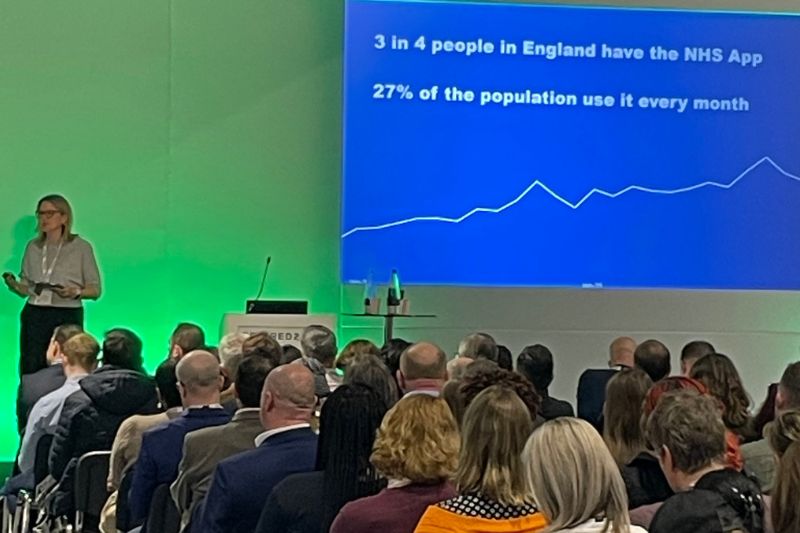
Speaking during a session on digital prevention services, Rachel Hope, Director of Digital Prevention Services at NHS England, outlined how the app is shifting from a transactional platform to a more personalised, preventative tool.
With more than a quarter of the UK population logging in each month, the NHS App is expanding its functionality to include health checks, vaccination records, screening invitations, appointment management, and patient-initiated follow-ups.
The longer-term ambition is to position it as a “trusted health companion”, supported by AI-enabled triage and tailored health insights.
AI and robotics move from concept to care delivery
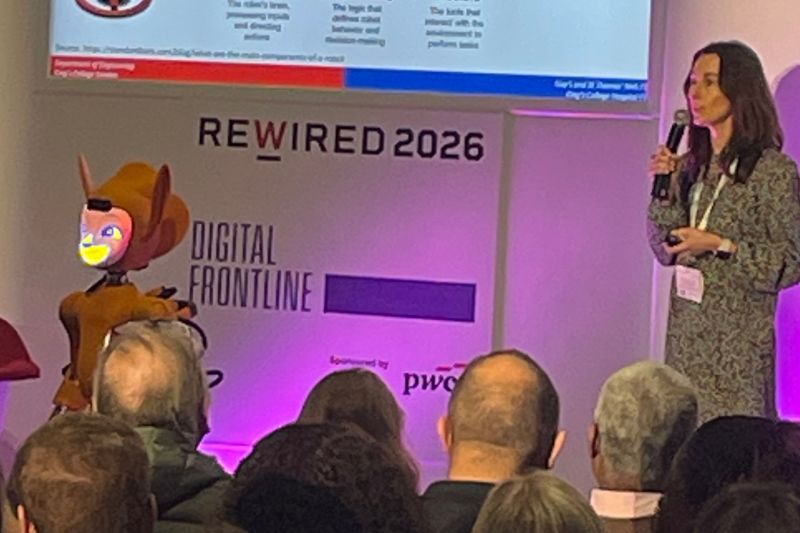
Elsewhere on the exhibition floor, attention turned to one of the event’s most eye-catching demonstrations: an AI-powered humanoid robot.
Developed through a collaboration between Guy’s and St Thomas’ NHS Foundation Trust and King’s College London, the robot, named Miroka, is being deployed to support patient interaction in a hospital setting.
During a live demonstration, Dr Oya Celiktutan, reader in AI and robotics at King’s College London, showcased how the robot can respond to patients through movement and interaction.
The trust is currently the first in the UK, and among the first globally, to pilot this type of humanoid technology in a live healthcare environment.
Data, security and the legal foundations of digital health
Alongside innovation, day one also underscored the importance of governance.
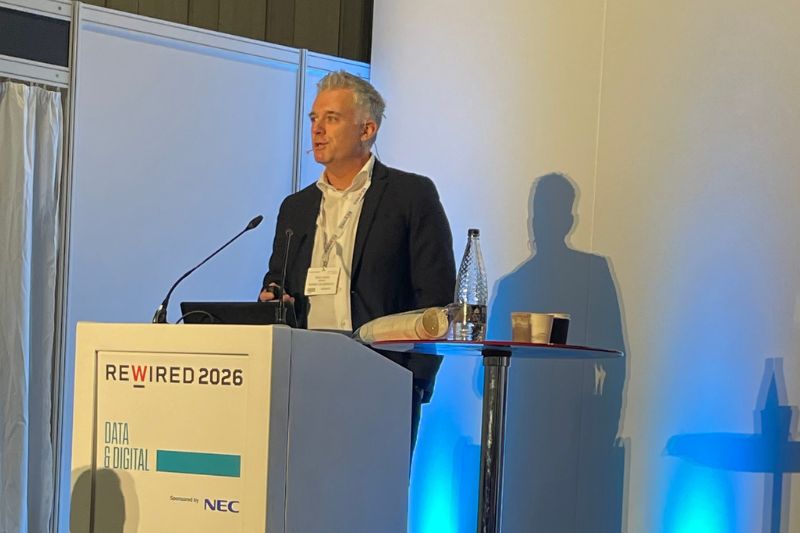
There was a session focused on secure data environments, with Philip James, partner and co-head of international data, privacy and cybersecurity at UK and Ireland law firm Browne Jacobson.
"Traditionally people have tended to look at compliance stuff towards the end of projects. Whereas now, there is much more a trend where people realise that you need to be involved in product counselling right from the project conception, initiation and creation, that embryonic stage to optimise value, maintain trust and reduce friction pre- and post-launch," James told Building Better Healthcare.
As the NHS continues its transition from analogue systems to interoperable digital platforms, James emphasised the need for robust data structures.
He also said there is a need for clear accountability, and regulatory alignment to ensure patient trust and system resilience.
"We are trying to help unlock the value of data but doing it with appropriate guard rails, checks and balances, and to make sure that people can actually leverage the value of that data for community benefit and most importantly for prevention," said James.
This formed part of a wider conference track dedicated to cybersecurity, data infrastructure and policy, reflecting the growing recognition that digital transformation must be matched by equally strong legal and governance frameworks.
The focus on neighbourhood health models
A keynote session on neighbourhood health models explored how digital tools can help connect primary care, community services and the voluntary sector to deliver more joined-up care.
Speakers, including Minal Bakhai, highlighted progress within the national neighbourhood health implementation programme, while representatives from The Access Group outlined practical steps to turn integrated care into a working reality.
Colette Marshall emphasised the role of the third sector, alongside patient advocate Debs Teal, who reinforced the importance of designing services around patient needs.
As day one drew to a close, the message was clear: digital transformation in the NHS is no longer aspirational, but increasingly embedded in how care is designed, delivered and experienced.


