
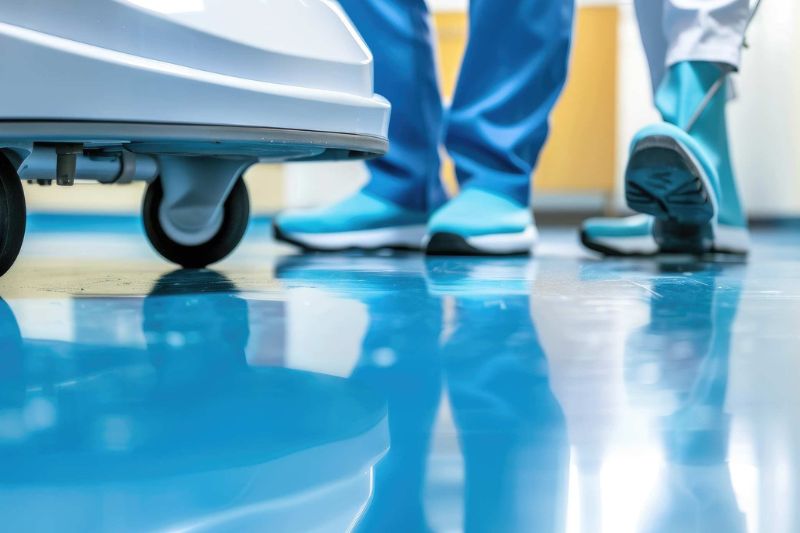
The healthcare sector is under mounting pressure to upgrade spaces without increasing capital expenditure, making restoration over replacement a choice worth considering during the design, build and maintenance of facilities.
Flooring is a prime example, and with surface hygiene and material longevity presenting major challenges, flooring restoration is gaining strong momentum.
This is driven largely by the need for improved infection control, increased pressure to reduce carbon footprints, and the urgency for more economical solutions.
Linoleum, rubber and vinyl, all resilient materials, are widely installed in healthcare environments for their durability, ease of maintenance, and ability to withstand heavy usage and footfall.
They are well designed to support the rigorous demands of healthcare settings.
However, over time, resilient flooring undergoes surface degradation due to constant foot traffic and the movement of medical equipment.
In addition, repeated exposure to aggressive cleaning solutions often accelerates wear and tear, leading to the loss of protective coatings and reduced slip resistance.
These factors gradually compromise surface performance and appearance, eventually requiring replacement or, increasingly, restoration, the latter being the more effective option.


