
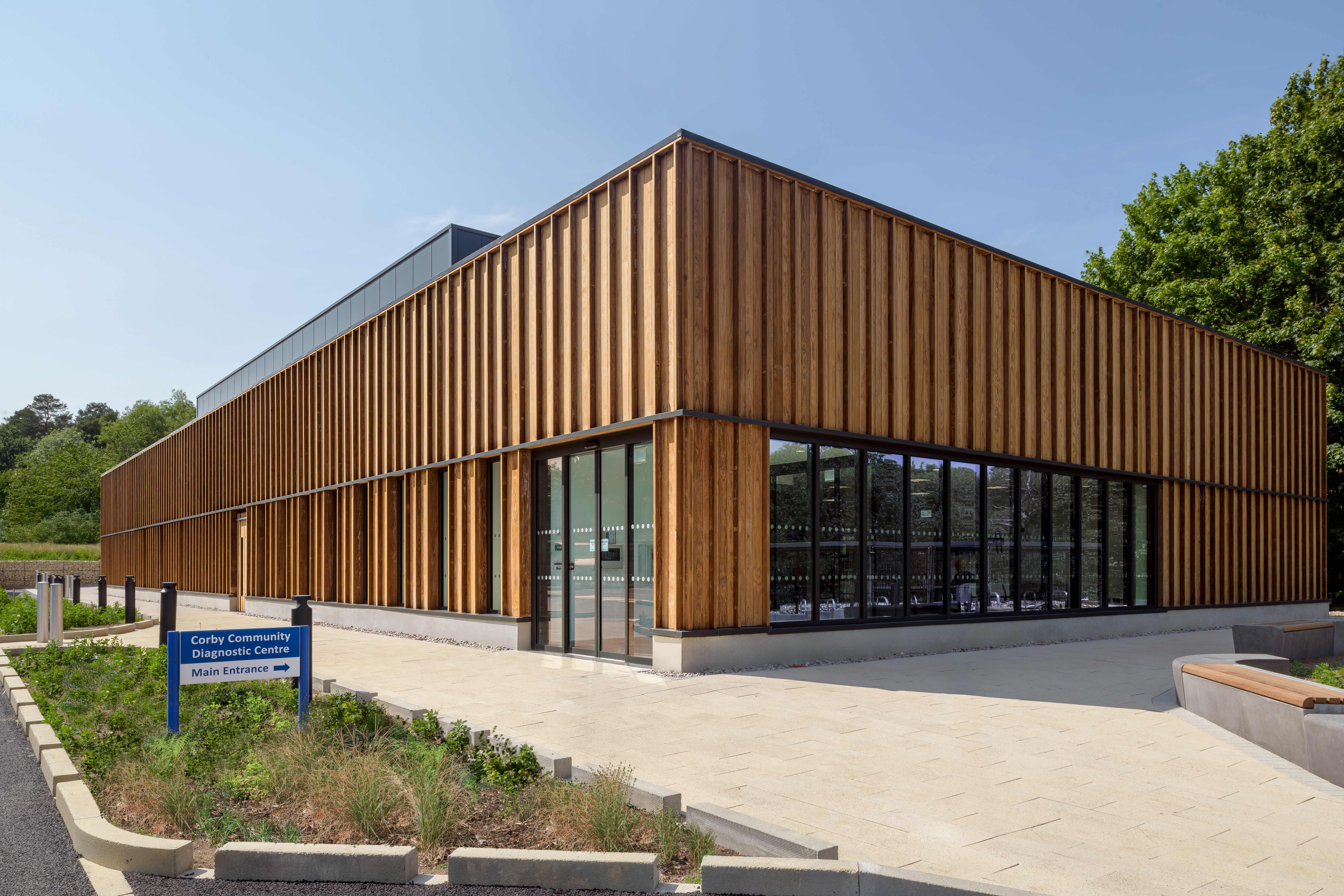
In the Autumn Budget, the Chancellor announced significant investment in the NHS, including £300m for technology upgrades and a commitment to deliver 250 new Neighbourhood Health Centres (NHCs), partly funded by private investment.
To me, this signals that the public healthcare system now has a clear mandate to expand, among many things, diagnostic, post-operative care and rehabilitation capacity quickly, consistently and at scale through a variety of funding models – allowing the batching of schemes that can be delivered at pace by NHS regions.
One way this can be achieved is by creating a series of templates, or archetypes, for Community Diagnostic Centres (CDCs) that are deliverable through modern methods of construction (MMC) in a programmatic way.
However, to be successful, such archetypes must be system-agnostic, patient-first and clear about what should be standardised nationally and what must remain responsive to local context.
By system-agnostic, we mean a design approach that supports MMC and off-site manufacturing without locking the NHS into a single delivery method.
AECOM’s work delivering the Corby CDC through its multidisciplinary team offers a useful example.
Delivered using modular construction, it demonstrates how a national MMC archetype could work in practice and, just as importantly, what it should and should not attempt to control.


